Evaluate the Quality of Laminate Flooring – How to Understand Ratings, Thickness, and Surface

Evaluate the Quality of Laminate Flooring – How to Understand Ratings, Thickness, and Surface
Laminate flooring has become a popular choice in many American homes – and for good reason. It’s durable, easy to maintain, and available in countless designs that mimic hardwood, stone, or tile. But not all laminate floors are created equal. Understanding what determines quality can help you choose a floor that looks great and lasts for years. Here’s how to evaluate laminate flooring based on ratings, thickness, and surface characteristics.
Understanding Ratings – AC Classes and Use Categories
When shopping for laminate flooring, you’ll often see labels like AC3, AC4, or AC5. These are part of the Abrasion Criteria (AC) rating system, an international standard that measures how resistant the surface is to wear, scratches, and impact. The higher the number, the tougher the floor.
- AC3 – Suitable for light residential use, such as bedrooms or home offices.
- AC4 – Ideal for most homes, including living rooms, kitchens, and hallways.
- AC5 – Designed for heavy traffic areas or commercial spaces, but also a great choice for busy households with kids or pets.
You may also see use class numbers like 31, 32, or 33, which follow a similar logic: the higher the number, the more durable the floor. For example, a laminate labeled 32/AC4 is a solid, all-around option for typical residential use.
Thickness – More Than Just a Number
Laminate flooring thickness usually ranges from 6 to 12 millimeters, and it affects comfort, sound, and stability.
- 6–7 mm: Budget-friendly options best for low-traffic areas.
- 8–10 mm: The most common thickness, offering a good balance of price, comfort, and durability.
- 10–12 mm: Premium floors that feel more solid underfoot and provide better sound absorption.
Keep in mind that thickness doesn’t necessarily mean a tougher surface – that’s determined by the AC rating – but thicker planks often feel more substantial and can help reduce noise. Also, don’t overlook the underlayment: a quality underlayment can improve sound insulation, moisture protection, and overall comfort.
The Surface – Where Looks and Function Meet
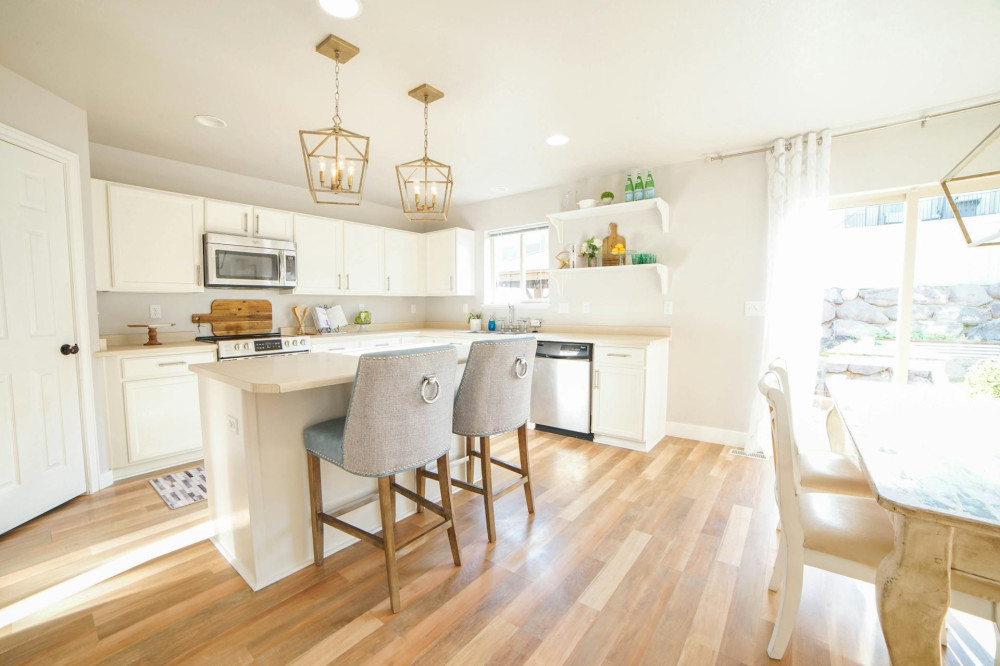
The surface of laminate flooring is about more than just appearance. It influences how realistic the floor looks and how well it holds up over time. High-quality laminate often features a textured surface that matches the printed wood grain, creating a more authentic look and feel.
Look for these surface features:
- Matte or low-gloss finish – Hides small scratches and looks more natural than high-gloss finishes.
- Beveled edges (V-groove) – Give the planks a more realistic, hardwood-like appearance.
- Anti-static coating – Helps reduce dust buildup and makes cleaning easier.
- Water-resistant or waterproof surface – Especially useful in kitchens, entryways, or basements where moisture is a concern.
If you have radiant floor heating, make sure the laminate is rated as compatible. This information is usually listed on the packaging or product specifications.
Quality Also Shows in the Locking System and Warranty
Another sign of quality is how the planks connect. Most modern laminate floors use click-lock systems, allowing for easy, glue-free installation. A precise locking mechanism ensures tight seams and reduces the risk of gaps forming over time.
Check the manufacturer’s warranty as well. A residential warranty of 20–30 years often indicates a high-quality product and confidence in its durability.
Choosing the Right Floor for Your Space
When selecting laminate flooring, consider where it will be installed:
- Bedrooms and offices – AC3 and 7–8 mm thickness are usually sufficient.
- Living rooms and kitchens – AC4 and 8–10 mm provide better wear resistance.
- Entryways and high-traffic areas – AC5 and 10–12 mm offer maximum durability.
Also think about your lifestyle and design preferences. Spending a bit more on a higher-quality laminate can pay off in the long run, especially if you want a natural look and minimal maintenance.
Læs også:

A Floor That Lasts – and Looks Great
A well-chosen laminate floor can last for decades while maintaining its beauty. By understanding ratings, thickness, and surface features, you can make an informed decision that fits your home and your daily life.
Quality laminate flooring isn’t just about price – it’s about finding the right balance between performance, appearance, and comfort. With the right choice, you’ll enjoy a floor that feels solid, looks beautiful, and stands up to everyday wear year after year.
Læs også: